

A love for the city of Maastricht, a love for science, and a love for art were the driving forces behind Edmond Hustinx's decision to establish a foundation to promote the arts and sciences in Maastricht. Edmond himself established the Hustinx Foundation in 1961.
The Hustinx Foundation was established in 1961 by Edmond Hustinx with the aim of promoting the arts and sciences in Maastricht.
The Hustinx Foundation implements its policy in various ways to achieve its goal. The foundation has various prices was created. It provides financial contributions on smaller and larger projects in the arts and sciences. She does this on her own initiative or upon request.
The financial resources required for this come from the fund managed by the foundation. The Hustinx Foundation manages assets, the revenues of which are used to promote science and the arts in Maastricht, always striving to maximize its social impact.

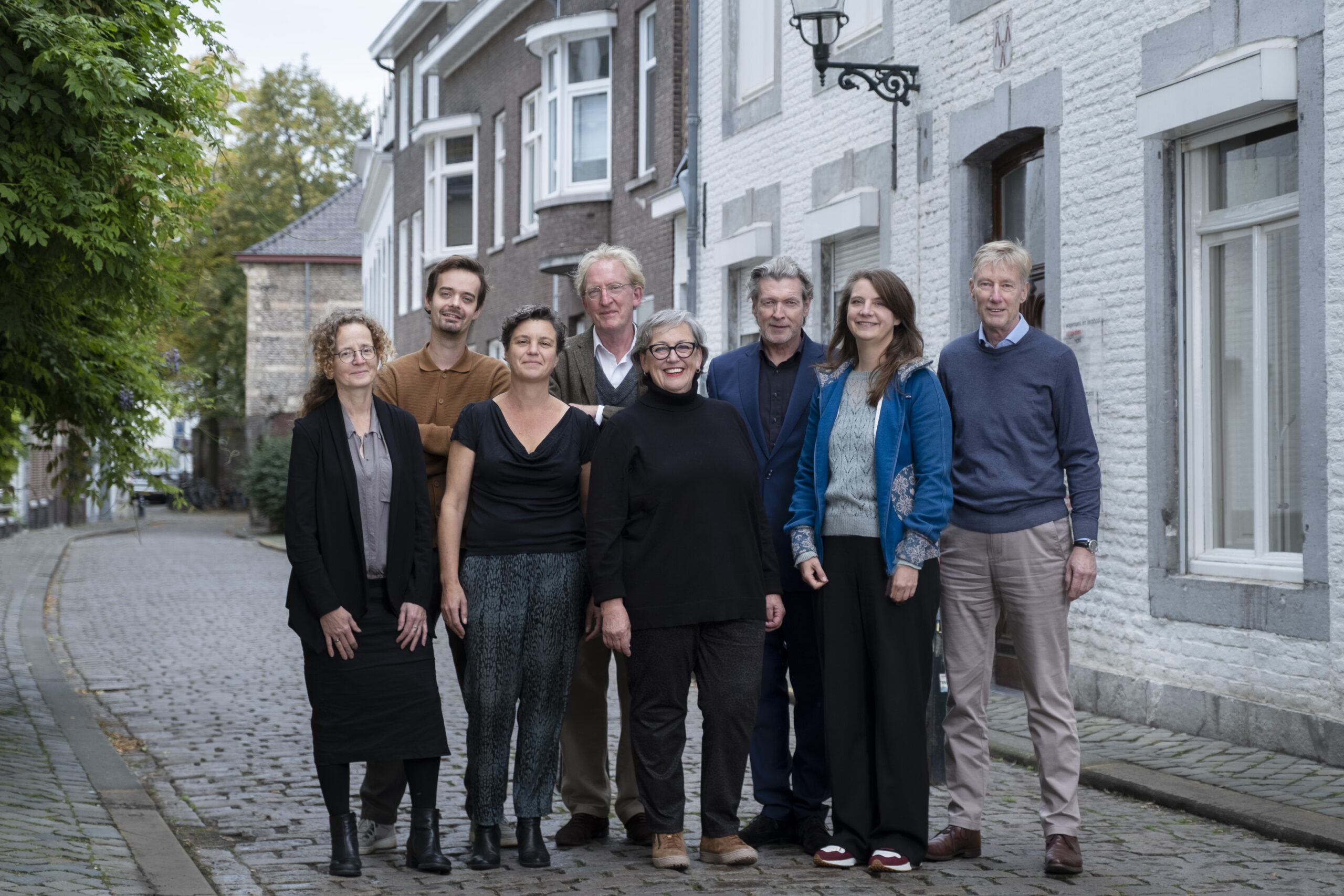
The Hustinx Foundation consists of a general board with members who have strong ties to cultural and/or academic life in Maastricht. They meet at least twice a year. The executive board meets more frequently when circumstances require and assesses the to request for support submitted to the foundation.
Members of the general board:
Members of the Executive Board:
Every four years, we develop a policy plan. This plan outlines our course for the coming period.
Read the Hustinx Foundation's policy plan here.
The board members of the Hustinx Foundation receive only reimbursement for reasonable expenses incurred in connection with their position and no attendance fees. The secretary of the Hustinx Foundation is not a board member and receives compensation.
Read the 2024 annual report of the Hustinx Foundation here.
Read the annual financial reports of the Hustinx Foundation here.
Since 1961, the Hustinx Foundation has been using Edmond Hustinx's legacy to promote the arts and sciences in Maastricht. Hustinx considered contributing to the well-being of others one of the greatest deeds one can do in life. He saw art and science as the strongest vehicles for culture and progress. If capital can be allocated to this, he knew, the realization of the ideal objective would also be substantial.
For the first 23 years of its existence, the foundation was dominated by Edmond Hustinx as chairman. After his death in 1984, the foundation's board, as Edmond Hustinx's heir, worked to increasingly professionalize the foundation's objectives.
(From: Edmond Hustinx 1898-1984)
Read more about the history of the Hustinx Foundation here.
The book 1961-2011 was published to mark the 50th anniversary of the Hustinx Foundation
Edmond Hustinx (1898-1984) seemed destined for a scientific career, but the First World War thwarted those plans. Cut off from a market and raw materials, Hustinx's father's Maastricht soap factory ran into difficulties; young Edmond abandoned his studies to help out at the company. This is where his creative genius found its place. He developed new production methods and devised ways to reuse waste materials. After the Second World War, the factory transformed into a laboratory for production methods with minimal environmental impact. This approach, which Hustinx himself described as "co-production," earned him the praise of the Club of Rome as a pioneer of sustainable industry. A practical application of this approach was his 1965 design for a heat pump. Hustinx's relentless pursuit brought him into contact with scientists and artists worldwide and brought internationally progressive ideas to Maastricht.
(source: Eureka!)
Edmond Hustinx (1898–1984) was a versatile and curious person, driven by science and culture. He studied medicine in Amsterdam and also took courses in philosophy and chemistry, but did not complete his studies. His broad academic interests remained his primary driving force throughout his life. In 1931, Hustinx took over management of his father's family factory: Zeepfabriek Hustinx NV in Maastricht. Under his leadership, the company experienced strong growth, although World War II hampered the production of traditional soap due to raw material shortages. The search for alternatives led to important innovations, such as the introduction of synthetic detergents.
After 1946, Hustinx focused on the production of water glass and metasilicate, a raw material for detergents. His invention of a continuously rotating kiln attracted international attention and led to collaborations in countries including Germany and France. Hustinx was exceptionally inventive: he acquired no fewer than 1,116 patents, including many production methods that reused waste materials. Edmond was encouraged by Nobel Prize winner Peter Debye, who admired his innovative, groundbreaking thinking.
The success of Edmond's businesses allowed him to actively pursue his passion for art and science. He established prizes for music, visual arts, and science, intended to honor and promote promising talent in Maastricht. To ensure this mission could continue after his death, Edmond Hustinx established the foundation named after him in 1961. His conviction lives on today: that innovation and creativity advance society and that young creators and researchers deserve every support in this regard. The Maastricht soap manufacturer and art patron is still known as a passionate inventor of great importance to the city and region.
Eureka!Do you have a great plan or project that could use a financial boost? Click the "Apply" button in the top right corner, complete the questions, and submit your proposal if it meets all the requirements.
The Hustinx Foundation selects applications that meet the themes that Edmond Hustinx already gave the foundation in 1961:
Implementing the last theme is not obligatory, but it is recommended when obtaining a donation.
The budget with which the Hustinx Foundation supports projects is unfortunately limited. Therefore, each project for which a grant is requested is carefully assessed based on the objectives of the Hustinx Foundation.
The Hustinx Foundation's contribution is usually between €500 and €1,500 and can only be requested once per calendar year by an artist (collective) or scientist.
Edmund Hustinx's interests were very diverse, resulting in a vast and diverse legacy. Unfortunately, the Hustinx Foundation has no physical location to store or exhibit these items. The Foundation would like to know where Edmond Hustinx's items have been found, but cannot collect them.
Read here what you can do if you want to support the Hustinx Foundation or leave a legacy to the foundation.